About GreeceFood & drink
Greek Coffee Culture: Freddo, Frappé, the Briki and the Art of Sitting for Hours
How to order a freddo espresso, why frappé still matters, how Greek coffee is made in a briki, and the unhurried café etiquette behind it all.
Contents · 8
The short version
Coffee in Greece is less a drink than a way of spending time. People meet for a coffee that lasts two hours, and nobody hurries them. What they drink has changed a great deal over the past decades, but the ritual has not.
- Freddo espresso — espresso shaken with ice and served over ice. The default summer order across the country.
- Freddo cappuccino — the same, topped with a thick layer of cold milk foam.
- Frappé — instant coffee whipped with water and ice into a tall foam. The drink that started Greece's iced-coffee habit, now more nostalgic than fashionable.
- Greek coffee (ελληνικός, el-li-ni-KOS) — finely ground coffee boiled in a small long-handled pot, the briki, and served with its grounds.
- Sugar is decided when you order, not added later: sketos (no sugar), metrios (medium), glykys (sweet).
- Sitting for hours is normal. A glass of water arrives with every coffee, and the bill comes when you ask for it.
Frappé: where the iced habit began
The frappé was born in Thessaloniki in the late 1950s, at the city's International Fair, when instant coffee was shaken with cold water and ice for want of hot water — or so the well-worn story goes. Whatever the exact details, the drink spread quickly and became a national symbol: a tall glass, a straw, a head of light-brown foam and a long afternoon ahead.
A frappé is made with instant coffee, a little water and sugar to taste, whipped until it foams, then topped up with cold water, ice and, if you want, milk. You order it with the same sugar scale as everything else, plus milk or no milk: frappé metrio me gala is a medium-sweet frappé with milk.
Frappé has lost ground to espresso-based drinks in cities, but you will still find it in beach bars, village kafeneia and anywhere older Greeks gather.
Freddo espresso and freddo cappuccino
Over the last few decades, as espresso machines spread across Greece, the country turned its iced-coffee habit onto the real thing. The result is the freddo espresso: espresso, usually a double shot, blended or shaken with ice until it turns silky and slightly foamy, then poured over fresh ice. It is stronger, cleaner and less sweet than a frappé, and in summer it is what most Greeks under sixty drink.
The freddo cappuccino adds a layer of cold, dense milk foam — afrogala, literally "milk foam" — on top. You drink the coffee through the straw and the foam slowly slides down into it. For a lighter version, ask for a freddo cappuccino with less foam; for a creamier one, more.
How to order like a local:
- Ena freddo espresso sketo — a freddo espresso, no sugar.
- Ena freddo cappuccino metrio — a freddo cappuccino, medium sugar.
- Glyko means sweet, and it will be properly sweet: sugar is dissolved while the coffee is shaken, so it cannot be added afterwards the same way.
- Syrups, oat or other plant milks and decaf are widely available in cities and resort areas, less so in villages.
Hot coffee is drunk too, especially in the morning and in winter, and Greek cafés serve cappuccino, flat white, filter coffee (usually just called filtro or "gallikos", French) and espresso as anywhere in Europe. But between May and October, the ice clinks everywhere.
Greek coffee in a briki
Greek coffee is the old way, and it is still made in homes, in traditional kafeneia and in many tavernas after a meal. The coffee is ground to a fine powder, mixed with cold water and sugar in a briki — a small pot, traditionally of copper or brass, with a long handle — and heated slowly until it rises. In some traditional places it is still warmed in hot sand.
The goal is kaimaki, the thick, fine foam on top; a good Greek coffee has plenty of it. It is poured into a small cup, with the grounds, and served with a glass of water. Let it rest for a minute so the grounds settle, sip slowly, and stop before you reach the sludge at the bottom.
The same kind of coffee is made across the eastern Mediterranean and the Balkans, and older Greeks may remember it under another name. In Greece today it is simply elliniko, Greek coffee, and that is the word to use.
The sugar scale for Greek coffee is more detailed than for iced drinks:
- Sketos — no sugar, bitter and strong.
- Metrios — medium, one teaspoon or so; the most common order.
- Glykys — sweet.
- Diplos — a double, in a larger cup.
A tradition that survives in some families is reading the grounds: when the cup is finished, it is turned upside down on the saucer and the patterns left inside are "read". Nobody will do this for you in a café, but do not be surprised if you see it at a friend's table.
Café etiquette: the unhurried table
The most important thing to know about Greek cafés is that you are not expected to leave. One coffee buys a table for as long as you like, whether that is twenty minutes or an entire afternoon. Groups of friends, pensioners with newspapers, students with laptops and couples watching the square can all sit for hours on a single freddo. Nobody will bring the bill until you ask.
A few habits worth knowing:
- Water comes automatically. A glass or small bottle of cold water is brought with your coffee, and often refilled. It is part of the service.
- Order at the table in most sit-down cafés. Some modern coffee bars are counter-service, especially for takeaway; if nobody comes within a few minutes, look at what the locals are doing.
- Ask for the bill when you are ready: ton logariasmo, parakalo. Pay at the table; card payments must be accepted by all businesses in Greece.
- Tipping is customary rather than required. Leaving the small change or rounding up is common for good service.
- Takeaway (sto heri, "in the hand") is everywhere, and a freddo in a cup is the unofficial accessory of every Greek summer street.
Kafeneio and café: two worlds
The kafeneio is the traditional coffee house: a plain room or a few tables under a tree on a village square, often where older men play tavli (backgammon) or cards, and where Greek coffee, frappé, ouzo and tsipouro sit on the same short menu. In villages it is the social centre, and a visitor who says kalimera and sits down quietly is almost always welcome.
The modern cafeteria is its opposite: design chairs, a long drinks list, music and a younger crowd. Cities and big resorts have them on every corner, and the best tables are the ones with a view of the street.
Where to sit and watch
Some places are made for a long coffee:
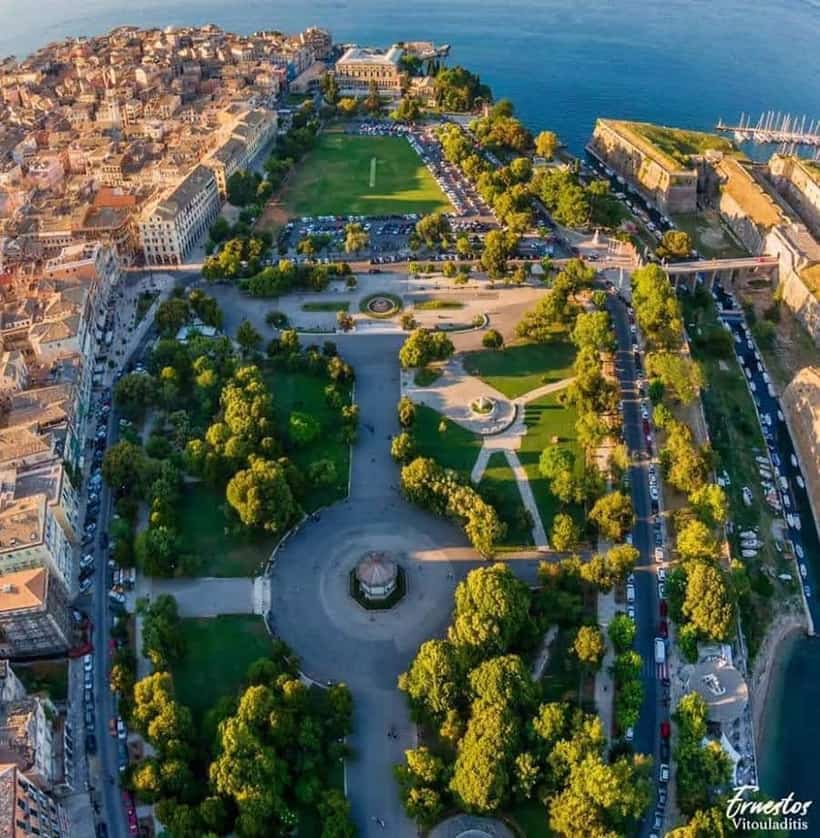
- Corfu Town — the arcaded Liston on the edge of Spianada Square is one of the most elegant café terraces in Greece. See our Corfu guide for the rest of the Old Town.
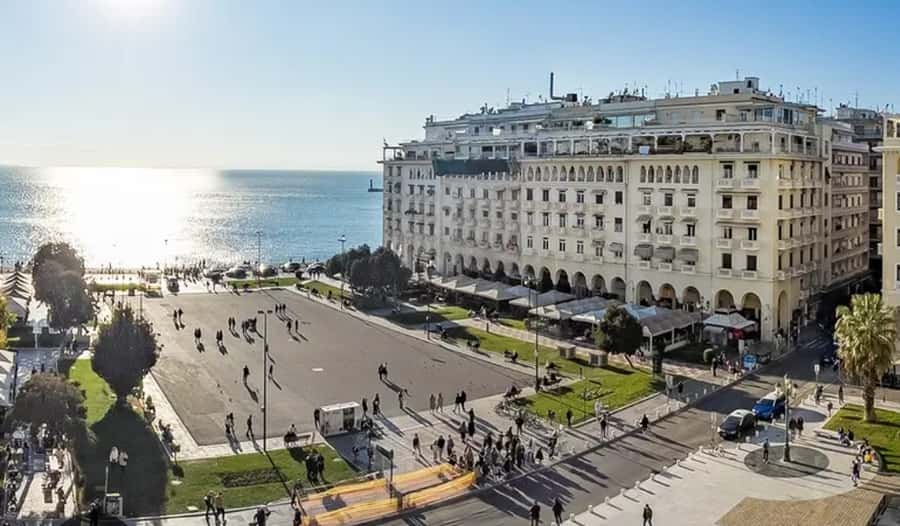
- Thessaloniki — the city that invented the frappé still takes its coffee seriously, from the seafront to Aristotelous Square. Pair it with our Thessaloniki food guide.
- Athens — the cafés of Plaka and the streets below the Acropolis are touristy but pleasant early in the morning; neighbourhood cafés elsewhere in Athens are where locals spend their afternoons.
- Any island harbour — the café closest to the ferry quay is the best waiting room in Greece. Check our ferries page before you settle in.
Coffee, heat and the rhythm of the day
In high summer, the café is also shelter. Greeks tend to be out early, retreat in the hottest hours and come back to the café in the evening, when the squares fill up again. Follow that rhythm and a long iced coffee in the shade becomes the sensible part of the day; our heatwave travel tips explain how to plan around high temperatures.
After a taverna lunch, a Greek coffee or a freddo is the natural next order; see what to order in a Greek taverna, and for the phrases that make ordering easier, our Greek for travellers guide.
Where to stay nearby
Live prices and availability on a map centred on this exact spot — hotels, studios and villas — so you can judge the distance to the beach, the port or the village from here rather than guess from an address.
Bookings made through this map earn us a commission. Your price is unaffected.
A travel advisor who writes about Greece the way he advises on it: island by island, with the catch attached to every recommendation. More about the author →
Frequently asked
What is a freddo espresso?
Espresso, usually a double shot, shaken or blended with ice until silky and slightly foamy, then poured over fresh ice. It is the standard summer coffee in Greece. A freddo cappuccino adds a layer of cold milk foam on top.
What is the difference between a frappé and a freddo?
A frappé is made from instant coffee whipped with water and ice into a tall foam; it dates from Thessaloniki in the late 1950s. A freddo is made from real espresso and is stronger, cleaner and less sweet.
How do I order sugar in my coffee in Greece?
Say it when you order: sketos (no sugar), metrios (medium) or glykys / glyko (sweet). With iced coffees the sugar is dissolved while the drink is shaken, so it is hard to add later.
Is Greek coffee the same as Turkish coffee?
It is the same style of coffee made across the eastern Mediterranean and the Balkans: finely ground, boiled in a briki and served with the grounds. In Greece, call it elliniko, Greek coffee.
Is it rude to sit for hours in a Greek café?
No. One coffee buys your table for as long as you like, a glass of water comes with it, and the bill arrives only when you ask for it.
Should I tip in Greek cafés?
Tipping is a custom rather than a rule. Leaving the small change or rounding up for good service is common. All businesses must accept card payments.
Before you go
We may earn a commission from these. It never changes your price.
About Greece