GuidesIslands
The Best Greek Islands for 2026, Matched to the Way You Travel
First trip, honeymoon, kids, food, hiking, quiet or parties: the Greek islands that genuinely fit each kind of traveller in 2026, and the ones to skip.
Contents · 11
- ΑThe short version
- ΒFirst-timers: Naxos, with Santorini as a short chapter
- ΓCouples: Santorini for the view, Milos for the days
- ΔFamilies: Naxos, Paros, Crete and Corfu
- ΕFood lovers: Sifnos and Crete
- ΣΤHikers and walkers: Folegandros, Naxos and Crete
- ΖQuiet and slow: Folegandros, Sifnos, Paxos, Symi and Hydra
- ΗParty: Mykonos and Ios
- ΘDriving from Romania: Thassos, Lefkada and Halkidiki
- ΙWho should skip what
- ΙΑHow to plan it
The short version
There is no single best Greek island, only the best island for the trip you actually want. Greece has more than a hundred inhabited islands, and they differ far more than the postcards suggest: some are volcanic and vertical, some are green and soft, some run on tractors and cheese, and some run on DJs. The mistake most people make is choosing by photograph and then discovering that the island in the picture does not suit the way they like to spend a day.
So this guide works backwards. Tell us who you are travelling as, and we will tell you where to go, what to be careful about in 2026, and where the honest answer is "not this one". If you want a quicker shortlist, the island finder asks five questions and does the sorting for you.
A note on logistics before we start. The islands are grouped into chains, and moving within a chain is easy while moving between chains is not. The Cyclades are linked by ferry; the Ionian islands sit off the west coast and are best reached by plane or from mainland ports; Crete is almost a country of its own. Read how the Greek island groups work if the map is still a blur.
First-timers: Naxos, with Santorini as a short chapter
For a first trip, you want an island that is easy to reach, varied enough to fill a week and forgiving if the weather turns. Naxos is the answer we give most often. It has an airport with short turboprop flights from Athens and a busy port with frequent ferries, long sandy beaches on the west coast (Agios Prokopios, Plaka), a proper main town with a Venetian kastro, and mountain villages such as Apiranthos that feel like a different island altogether. It is big, so rent a car for at least part of the stay.
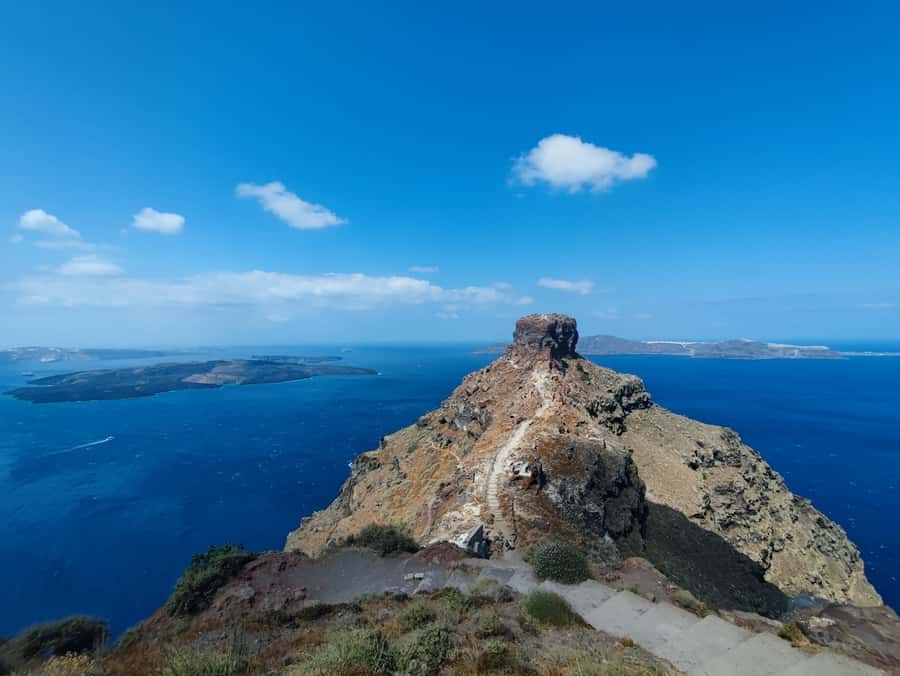
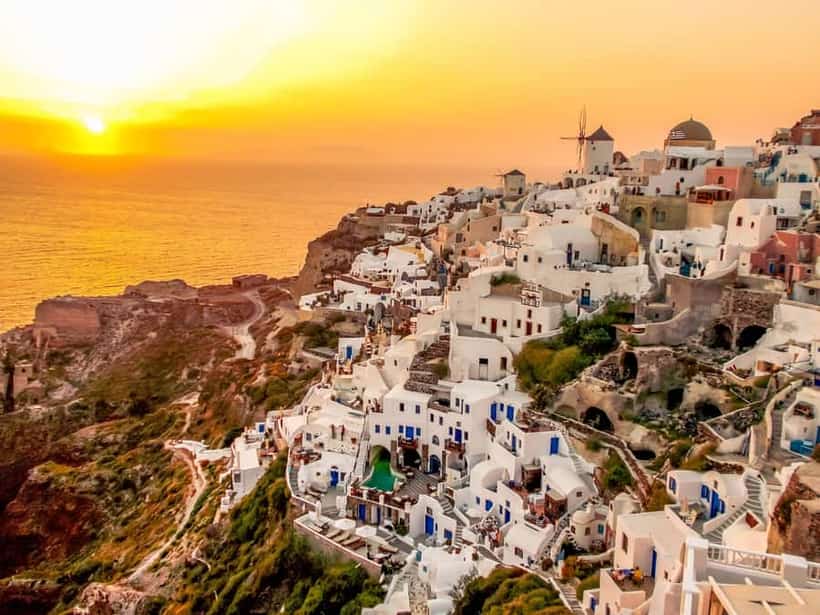
Santorini belongs on a first trip for many people, and that is fine — the caldera is genuinely one of the great sights of the Mediterranean. But treat it as two or three nights, not a week. It is expensive, the beaches are dark volcanic sand rather than the Greek ideal, and on cruise days the lanes of Fira and Oia fill fast. The island now caps cruise arrivals at 8,000 passengers a day and charges ships a €20 fee per passenger in high season, which helps, but it does not make Oia at sunset quiet. Our Santorini vs Mykonos comparison goes deeper.
Paired, the two work beautifully: Naxos to Santorini is a ferry of roughly one to three hours depending on the boat.
Couples: Santorini for the view, Milos for the days
Honeymooners gravitate to Santorini for its cliff-edge suites, and if a caldera terrace is the point of the trip, book it. For couples who care more about what they do between breakfast and dinner, Milos is the more rewarding island. The coastline is sculpted — the white moonscape of Sarakiniko, the painted boathouses of Klima, the sea arches of Kleftiko — and sunset from the hilltop village of Plaka rivals anything on the caldera, without the crush.
Be realistic about two things. Kleftiko is reached only by boat and trips depend on the wind, so do not leave it for your last morning. And many of the best beaches sit at the end of dirt roads; a small car or a careful quad ride is part of the deal.
Families: Naxos, Paros, Crete and Corfu
Families need shallow water, short transfers and enough to do on a windy day. Naxos again scores highly: gently shelving sand, easy tavernas, and a town where children can run around the harbour in the evening. Paros works too, especially if you base in or near Naoussa and use the short boat hop to Antiparos for a change of scene. Our Naxos vs Paros guide helps you choose between them.
If you would rather fly direct and skip ferries entirely, look west or south. Corfu has a UNESCO-listed Old Town, forts to explore and green hills behind the beaches; just note that the Achilleion palace currently opens only its gardens while restoration continues. Crete has everything — Minoan palaces, including Knossos, now inscribed by UNESCO as part of the Minoan Palatial Centres, plus some of the most famous beaches in Greece — but distances are real. Pick one region and stay put rather than driving the whole island with children in the back.
Food lovers: Sifnos and Crete
Sifnos has a reputation among Greeks as the island where people come to eat. Its cooking tradition, clay-pot dishes and working potteries give it a character that is about table and craft rather than nightlife. It is small, walkable in parts, and has no airport, so you arrive by ferry. Go in June or September: in August it fills with Athenian families and rooms become scarce.
Crete is the other obvious choice, for the sheer range of produce, the olive oil, the mountain cheeses and the raki culture. If food is your main reason to travel, a week in western Crete will teach you more about Greek cooking than any single Cycladic island can.
Hikers and walkers: Folegandros, Naxos and Crete
Folegandros is a hiker's island. The main village clings to a cliff about 200 metres above the sea, and a well-known trail of roughly 13 km links Chora with Livadi and the beach at Katergo. Naxos has old marble paths between inland villages, and Crete has its gorges — though Samaria and others close on days of extreme heat or fire risk, so keep a plan B. Our guide to the quiet Cyclades covers Folegandros and Sifnos in detail.
Quiet and slow: Folegandros, Sifnos, Paxos, Symi and Hydra
For silence and a slower pulse, choose islands without airports. Folegandros and Sifnos in the Cyclades, Paxos in the Ionian (reached by boat from Corfu), Symi in the Dodecanese (a boat ride from Rhodes) and Hydra in the Saronic Gulf, where there are no cars at all. The trade-off is access: fewer ferries, more dependence on the wind and less choice of where to eat. Symi and Hydra also receive day-trippers around midday, so the magic belongs to those who stay the night.
Party: Mykonos and Ios
Mykonos is the glamorous, expensive version, with beach clubs, a lively town and one of the busiest cruise ports in the Aegean. Ios is the younger, cheaper version, and its nightlife really concentrates in July and August. Both are exposed to the meltemi, the strong north wind of high summer, which can make the north-facing beaches unpleasant and delay ferries. If you want dinner and music rather than all-night clubbing, Paros and Naoussa hit a comfortable middle.
Driving from Romania: Thassos, Lefkada and Halkidiki
Many readers in Romania travel by car, and three destinations make that especially easy. Thassos is the classic: drive to Keramoti and cross in 35–40 minutes, with the adult ferry fare at €6 and a standard car at €22 on the ANETH boats. We cover it in depth on our sister site thassos.online. Lefkada is connected to the mainland by a bridge, so there is no ferry at all; its west-coast beaches are superb, though Egremni is officially closed by land and reachable only by boat. Halkidiki is not an island but gives island-grade water within a long day's drive. The practical details — borders, vignettes and tolls — are on our from Romania page.
Who should skip what
- Skip Santorini if you want beach days or a small budget; stay on Naxos and visit on a day or two.
- Skip Mykonos if prices matter or you dislike wind.
- Skip Folegandros if you have a tight flight connection; its limited ferries leave little margin.
- Skip Zakynthos for Navagio this year: the famous shipwreck beach is closed to landing until 31 October 2026, and you can only see it from the clifftop viewpoint.
How to plan it
Most island trips in 2026 still run through Athens and the port of Piraeus, and the ferry network rewards sensible pairings rather than ambitious zigzags. Put islands from the same chain together, leave a buffer day before any international flight, and read our ferry booking guide before you buy tickets. When you are ready to join the dots, the Cyclades island-hopping guide turns this list into routes that actually work.
Prices checked September 2026.
Prices, fees and rules in this piece were checked in September 2026. They change — confirm with the operator or site before you travel.
Where to stay nearby
Live prices and availability on a map centred on this exact spot — hotels, studios and villas — so you can judge the distance to the beach, the port or the village from here rather than guess from an address.
Bookings made through this map earn us a commission. Your price is unaffected.
A travel advisor who writes about Greece the way he advises on it: island by island, with the catch attached to every recommendation. More about the author →
Frequently asked
Which Greek island is best for a first visit?
Naxos is the most forgiving choice: it has an airport and frequent ferries, long sandy beaches, a real town and mountain villages. Add two or three nights on Santorini if you want to see the caldera; the ferry between them takes roughly one to three hours depending on the boat.
Is Santorini still worth it in 2026?
For the caldera view, yes, but keep the stay short. It is expensive, its beaches are dark volcanic sand, and cruise days are busy even with the daily cap of 8,000 cruise passengers. Visit Oia and Fira early in the morning or after the ships leave.
Which Greek islands are quiet and have no airport?
Folegandros and Sifnos in the Cyclades, Paxos in the Ionian, Symi in the Dodecanese and Hydra in the Saronic Gulf. All are reached by boat, so plan around fewer connections and possible wind delays.
Can I reach a Greek island by car from Romania without a long ferry?
Yes. Lefkada is linked to the mainland by a bridge, and Thassos is a 35–40 minute crossing from Keramoti (adult €6, standard car €22, prices checked September 2026). Halkidiki offers island-quality beaches on the mainland.
Can I visit Navagio beach on Zakynthos in 2026?
Not on the sand. The beach is closed to landing and swimming until 31 October 2026 because of landslide risk. You can still see it from the clifftop viewpoint above the bay.
Partner links · GetYourGuide
Tours, boat trips & tickets
Boat trips, guided tours of the ancient sites and tickets bookable ahead — free cancellation on most.
See all options: Cyclades island boat tour →We may earn a commission from these. It never changes your price.
Before you go
We may earn a commission from these. It never changes your price.
Guides