About GreeceIslands
The Greek Island Groups Explained: Cyclades, Ionian, Dodecanese and the Rest
Greece has thousands of islands in a handful of groups, each with its own landscape, history, weather and way in. A plain-English map for choosing.
Contents · 9
The short version
Greece counts several thousand islands and islets, of which a little over a hundred are inhabited. For a traveller, they fall into a handful of groups, and the group matters more than any single island: it decides the landscape, the architecture, the wind, the ferries and whether you can hop easily from one island to the next.
- Cyclades — the classic white-and-blue Aegean: Santorini, Mykonos, Naxos, Paros, Milos. Dry, bright, windy in summer, perfect for island hopping.
- Ionian Islands — green, Venetian-influenced, turquoise water, off the west coast: Corfu, Zakynthos, Kefalonia, Lefkada, Paxos. Calmer seas, reachable by car ferry or bridge.
- Dodecanese — close to Turkey, layered with Knights, Ottoman and Italian history: Rhodes, Kos, Symi.
- Crete — a group of one: the largest island, almost a country of its own.
- Saronic Islands — Athens' weekend islands: Aegina, Hydra, Spetses.
- Sporades — pine-covered and gentle, north of Evia: Skiathos, Skopelos.
- North Aegean — big, less-visited islands near the Turkish coast, plus Thassos off Macedonia.
If you know what kind of holiday you want but not where, the island finder matches the two.
The Cyclades
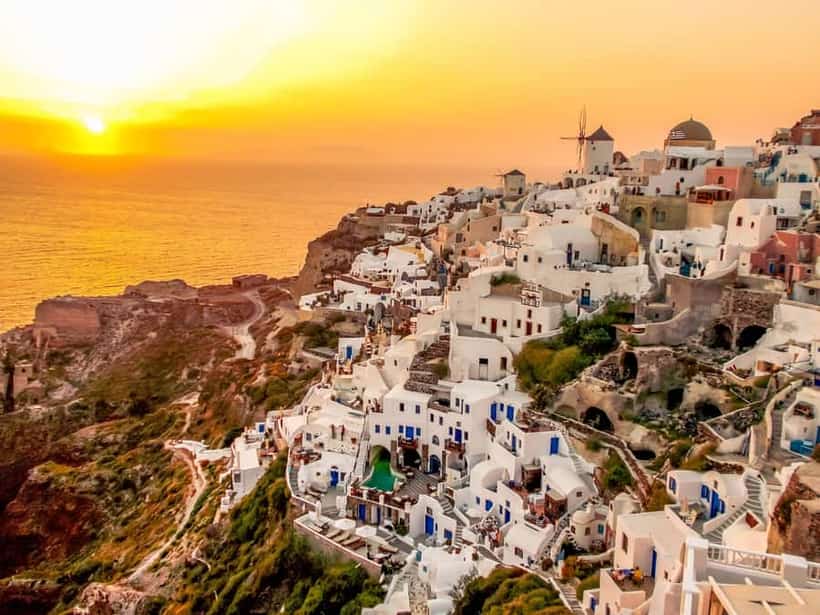
The name comes from the circle (kyklos) the islands form around sacred Delos, birthplace of Apollo in myth. This is the group most people picture when they think of Greece: cube-shaped white houses, blue-domed churches, windmills, bare brown hills and very clear water.
- Character: dry, treeless, sunny, with dramatic light. Villages are compact and walkable; beaches range from long sand on Naxos and Paros to the volcanic and lunar coasts of Santorini and Milos.
- Weather: hot, but tempered in July and August by the meltemi, the strong north wind that can make the sea rough and cancel fast boats. See the meltemi explained.
- Access: airports on Santorini, Mykonos, Naxos, Paros and Milos; frequent ferries from Piraeus and Rafina, and many connections between the islands.
- Best for: first-timers, island hopping, couples, photographers. The big names are expensive and crowded in peak season; smaller islands such as Folegandros and Sifnos are calmer.
Start with our Cyclades island hopping guide, Santorini vs Mykonos and Naxos vs Paros.
The Ionian Islands
Strung down the west coast from Albania to the Peloponnese, the Ionian Islands spent centuries under Venice, largely escaped long Ottoman rule, and later passed through French and British hands before joining Greece in 1864. You see it in the architecture of Corfu Old Town, in the music and in the food.
- Character: green. Wetter winters mean olive groves and cypress down to the shore. The water is the famous turquoise over white pebbles, especially on Zakynthos, Kefalonia and Lefkada.
- Weather: hot summers with less wind than the Aegean, so calmer seas; more rain in spring and autumn.
- Access: airports on Corfu, Zakynthos and Kefalonia (plus Preveza for Lefkada); car ferries from Igoumenitsa and Kyllini; Lefkada is joined to the mainland and you can drive straight onto it.
- Best for: families, road trips, drivers from Romania and the Balkans, beach lovers. Island hopping is possible but less fluid than in the Cyclades.
The Ionian guides: Corfu with kids, Kefalonia road trip, Lefkada's beaches by car and Zakynthos after the Navagio closure.
Crete
Crete is technically its own region rather than part of a group, and it behaves like a small country: more than 250 km from end to end, with high mountains, deep gorges, Minoan palaces, Venetian harbours and a food culture of its own.
- Character: everything at once — the lagoon of Balos and the pink sand of Elafonisi in the west, the palace of Knossos near Heraklion, villages in the White Mountains and the Lasithi plateau.
- Access: two international airports, Heraklion and Chania, plus Sitia; overnight and fast ferries from Piraeus.
- Best for: a week or more with a car; hikers, food lovers, history lovers. Not an island to hop off quickly — distances are long.
See the best beaches in Crete.
The Dodecanese
The "twelve islands" — in practice more — sit off the south-west coast of Turkey. Their history is unusually layered: ancient Greek city-states, the medieval Knights of St John, Ottoman rule and, from 1912 to the Second World War, Italian administration. They joined Greece only in 1947–48.
- Character: a mix of green and rocky; fortified towns, Italian-era buildings, harbours of painted neoclassical houses such as Symi's.
- Highlights: the Medieval City of Rhodes, a UNESCO World Heritage Site since 1988, and the acropolis of Lindos; the Asklepieion on Kos; the harbour of Symi.
- Access: airports on Rhodes and Kos with many international flights; local ferries between the islands.
- Best for: history plus beaches, long seasons (Rhodes is among the warmest places in Greece in spring and autumn), family resorts.
Read Rhodes Old Town and Lindos.
The Saronic Islands
The islands of the Saronic Gulf are close enough to Athens for a day trip or a weekend, and Athenians treat them exactly that way.
- Aegina: the closest, famous for pistachios and the Temple of Aphaia.
- Hydra: no cars, stone mansions, donkeys and water taxis — the most elegant of the group.
- Spetses: pine woods, naval history and restricted private car use.
They are busy with Greek visitors at weekends and in August, and quieter midweek. See Saronic islands day trips from Athens.
The Sporades
North of the long island of Evia, the Sporades are the green, gentle side of the Aegean: pine forests down to sandy coves.
- Skiathos: the liveliest, with an airport, sandy beaches and nightlife.
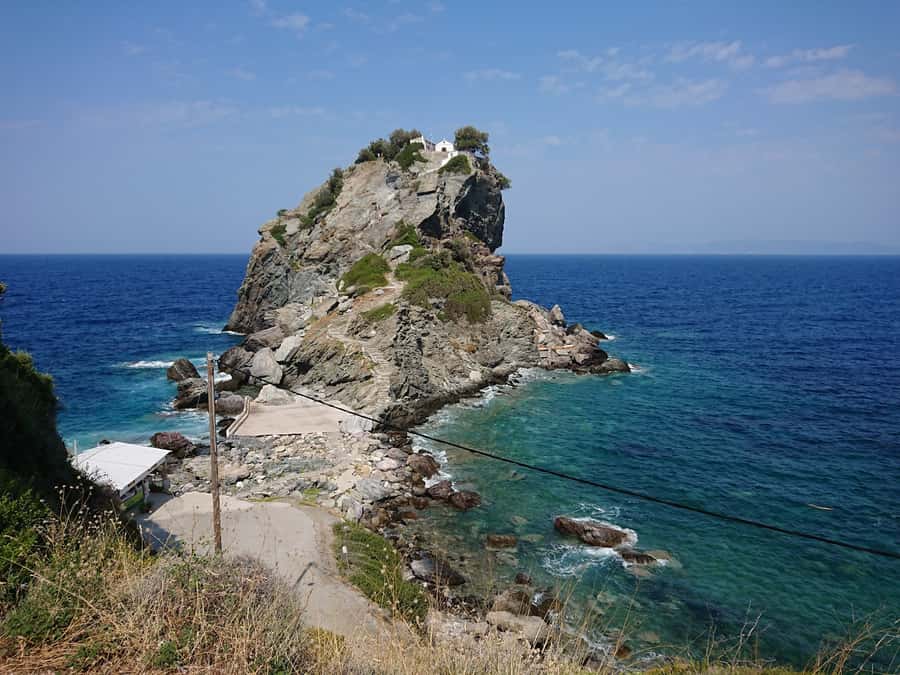
- Skopelos: quieter and greener, home of the chapel from Mamma Mia! — see our piece on it.
- Alonissos and Skyros: further out, for those who want fewer people and a national marine park.
Access is through Skiathos airport or ferries from Volos and Agios Konstantinos.
The North Aegean
The islands of the north-eastern Aegean — Lesvos, Chios, Samos, Ikaria, Lemnos and others — are large, lived-in and far less touristy than the Cyclades, with strong local identities, and some of them benefit in 2026 from reduced VAT rates for small and remote islands. Ikaria is known for the longevity of its residents; Chios for mastic; Lesvos for ouzo and olive oil.
Off the Macedonian coast, Thassos is the green island most Romanians know best, a short ferry ride from Keramoti or Kavala. We cover it on our sister site, thassos.online.
Choosing a group
- First trip, want the postcard: Cyclades.
- Family with small children, or arriving by car: Ionian Islands, Halkidiki on the mainland, or Crete.
- History and beaches together: Dodecanese or Crete.
- Short on time, based in Athens: Saronic Islands.
- Green, quiet, walking: Sporades.
- Off the beaten track: North Aegean.
Don't try to cross groups too casually. Ferries within a group are frequent; ferries between groups are often long, infrequent or routed through Piraeus. If you want to combine, say, Crete and Rhodes or Corfu and Santorini, a domestic flight via Athens is usually quicker. Our ferries page, island hopping ideas and airports page help you plan the links, and the best Greek islands for 2026 narrows the choice by traveller type.
Where to stay nearby
Live prices and availability on a map centred on this exact spot — hotels, studios and villas — so you can judge the distance to the beach, the port or the village from here rather than guess from an address.
Bookings made through this map earn us a commission. Your price is unaffected.
A travel advisor who writes about Greece the way he advises on it: island by island, with the catch attached to every recommendation. More about the author →
Frequently asked
What are the main Greek island groups?
The Cyclades, the Ionian Islands, the Dodecanese, the Saronic Islands, the Sporades and the North Aegean islands, plus Crete, which forms a region of its own.
Which Greek island group is best for island hopping?
The Cyclades. Ferries between Naxos, Paros, Santorini, Mykonos, Milos and their neighbours are frequent in summer, though the meltemi wind can disrupt fast boats.
Which island group has the calmest sea?
The Ionian Islands generally have less summer wind than the Aegean, so the sea is often calmer — one reason they suit families.
Can I drive to a Greek island?
Yes, to Lefkada, which is joined to the mainland. Other islands such as Corfu, Kefalonia, Zakynthos and Thassos are a short car-ferry ride away.
Is it easy to travel between island groups?
Not always. Ferries between groups can be long or infrequent and often route via Piraeus; a domestic flight through Athens is frequently quicker.
Partner links · GetYourGuide
Tours, boat trips & tickets
Boat trips, guided tours of the ancient sites and tickets bookable ahead — free cancellation on most.
See all options: The Greek Island Groups Explained: Cyclades, Ionian, Dodecanese and the Rest, Greece →We may earn a commission from these. It never changes your price.
Before you go
We may earn a commission from these. It never changes your price.
About Greece